
Jackson Has No Official Weekly Blotter
Check the county's own pages first. The Sheriff navigation lists no arrest-log link. The County Jail page offers no public archive. Nothing defines a posting cadence, a field list, or a photo policy. Nor does anything say where released and transferred entries go. A private directory posing as a Sheriff blotter hides all of those limits.
The official page still matters. It is the right absence check and contact point. Check it directly rather than trusting old search-engine snippets, since a prior county roster was deactivated during a system update. That history does not mean a log exists today. The official Sheriff page is where a restored link would appear.
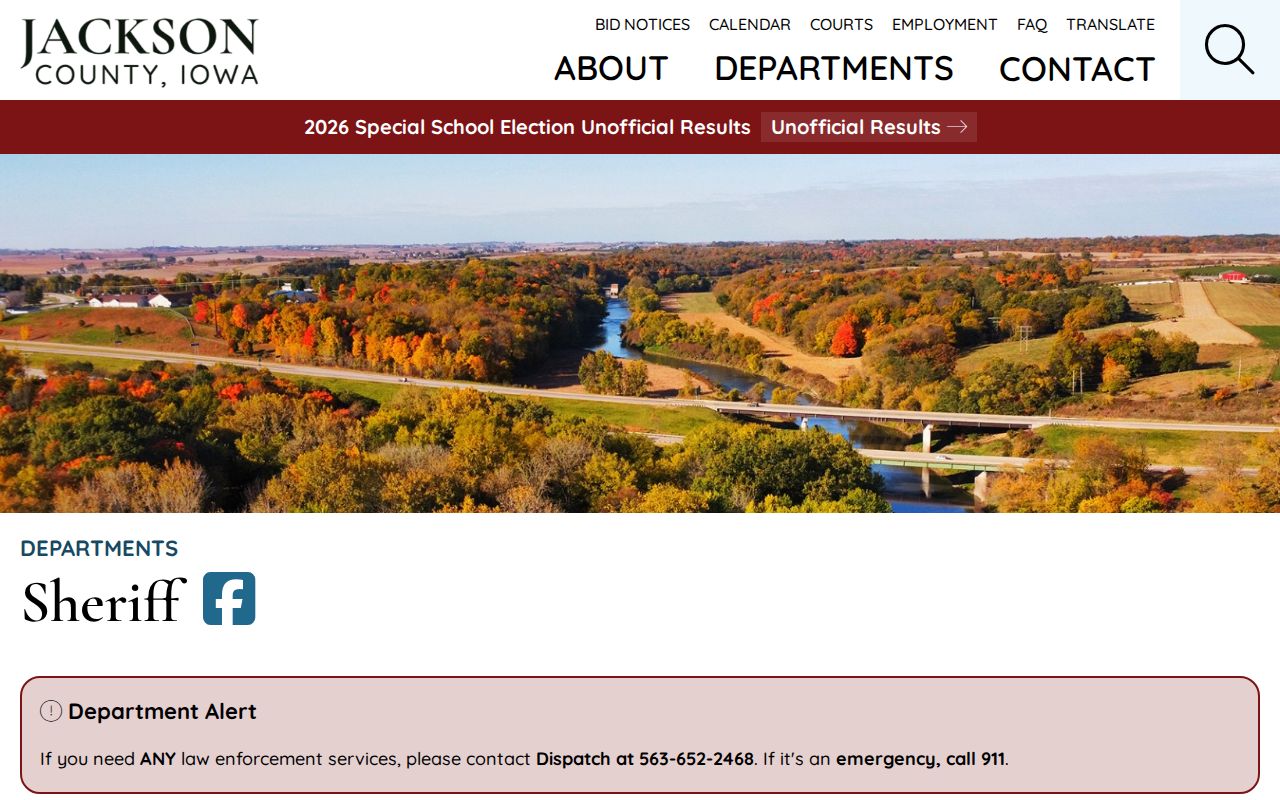
The capture documents the official navigation, not a booking list or gallery.
Build a Multi-Day Arrest Timeline
Work backward from the event itself. Assume no single database holds everything.
- Write down the person's legal name, possible spelling variations, city, approximate incident date, and arresting agency.
- Check the Sheriff and Jail pages for a newly published official log. If current custody matters, call 563-652-3312 instead of inferring it from an article.
- Search KMAQ Local News by name, place, and date. Record the story's publication date and its cited source.
- Search Iowa Courts Online for a public case, using Jackson County and a case number when available. Treat the docket as court history, not current custody.
- Request the arrest or detention record from the Sheriff's records unit. Ask a city police department separately when it created the incident report.
- Use IowaVINE for available custody and release alerts, not as an archive of every arrest.
Use the Daily Arrest Report for same-day confirmation. The Jackson County recent arrests hub goes deeper on records, photos, custody, and courts. Neither one is a weekly list.
Read Each Source by Provenance
| Source or field | What it can establish |
|---|---|
| Arresting agency and incident date | Who documented the event and when it allegedly occurred. |
| Jail commitment and discharge | Entry into and exit from the Sheriff's care, subject to the official record. |
| Booked charge and bond | Charges and a custody condition at that stage, not guilt. |
| News publication date | When a publisher reported a selected event, not when every arrest happened. |
| Sworn affidavit or police report | The stated basis for charges, still subject to litigation and challenge. |
| Court case and hearing | Filed proceedings and eventual disposition, not present jail location. |
| Photograph or story image | Only what the caption and originating source identify; it may not be a mugshot. |
A name alone proves little. Confirm county, state, agency, date, and case number. Other states have a Jackson County too, so Alabama or Florida arrest hits do not concern Jackson County, Iowa.
Event-Driven News Is Selective
KMAQ is the strongest local-news source for the county. Its stream is event-driven, not a recurring jail report. One March 20, 2026 arrest article drew on an officer's sworn affidavit and official court filings. It named Maquoketa Police as the arresting agency and reported jail, bond, and hearing details. That is a solid lead for one event. It proves neither that every booking gets covered nor that articles follow a set schedule. The KMAQ news index shows this topic-based flow.
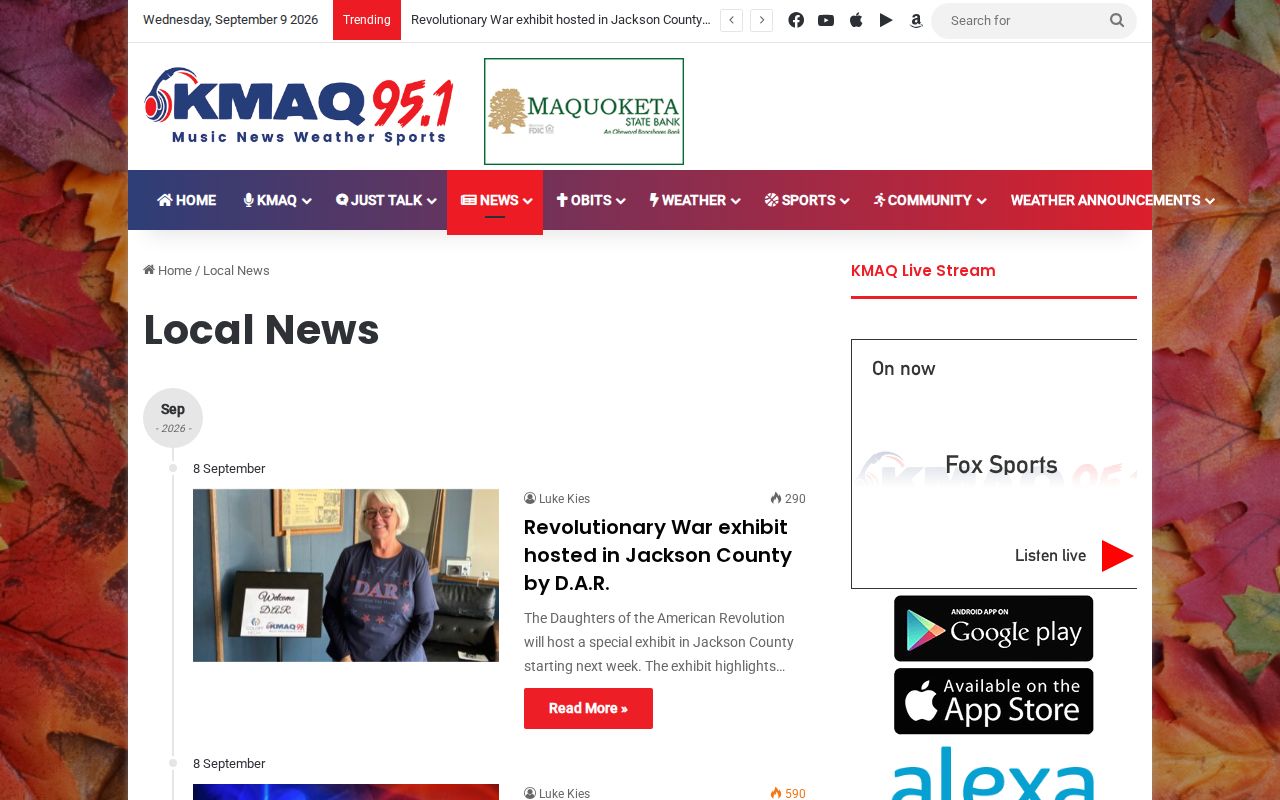
A dated story can name a person, but a missing name proves nothing either way. No story means no arrest? Not necessarily. KCRG offers another example of regional breaking coverage, showing a serious Sheriff event can appear outside the Maquoketa stream. Regional outlets pick stories editorially. An incident or scene photo must never be treated as a booking photograph.
Printed Incidents Are Historical Leads
Print archives work differently. The Maquoketa Sentinel-Press archive example carries an "Incidents" section that may preserve a dated local item after a web story fades. A newspaper issue is not a custody roster, though. It reflects one publication date and one editor's coverage choices, never a guarantee of every booking. Note the issue date, the event date in the text, the named agency, and any case number. Then request the originating record or court docket. No recurring Bellevue or Preston arrest blotter exists. KMAQ may cover those towns. Silence in its index proves no arrest occurred there.
Weekend Arrests Need Verification
Weekend patterns cannot be established without an official feed. Nothing shows weekend bookings are held to Monday, posted at once, or skipped. A Monday article might cover a Friday incident. A Monday court filing might follow a weekend release. Keep those dates separate. For current custody questions, call the Sheriff and use the VINELink Inmate Check. For a full date range, ask the records custodian for the defined record rather than compiling names from news. Specify the range, person, agency, location, and record type, and expect a confidentiality review.
Arrest Archives and Retention
Iowa Chapter 22 sets no fixed period. It does not require booking entries or photographs to stay online. Retention depends on statutes, approved schedules, agency policy, holds, and record type. A deleted webpage does not mean a destroyed record. A kept record may still need redaction before release. Iowa Code section 356.6 requires a prisoner calendar with commitment and discharge details. Iowa Administrative Code rule 201-50.22 sets a two-year minimum for that jail calendar. That applies unless another period governs. That rule does not keep every mugshot online for two years. Booking-photo retention has no publicly specified term. Ask the Jackson County Sheriff first about older detention records. If material was transferred or is historical, try the State Historical Society's Jackson County collections. State prison records sit with the Iowa Department of Corrections. Federal records use separate federal systems.
Request a Defined Date Range
A good records request is specific. Name the person, the arresting agency, and the approximate dates. Give a location and a case number if you have one. The office never publishes a weekly report. Request the exact record you need instead. That could be an arrest, an incident, a jail calendar, a commitment, or a discharge. It also pays to ask where older material sits. Some of it may have been transferred out of the county. Confirm any lawful restrictions and copying fees before you commit. Detention records from the county belong to the Sheriff. City incident files may stay with police in Maquoketa, Bellevue, or Preston. Keep your timeline straight, too. A VINELink status tells you who is in custody now. It says nothing about an arrest from years back. Old jail records answer that kind of question instead. The Iowa DOC search covers a different stage entirely. It applies after someone has moved into state prison or supervision. Federal and immigration custody run on their own systems. Aim each request at the right custodian. An old arrest entry or archive result will not get mistaken for a current booking.
Public Record Search
Sponsored Results